Dates:
8–25 October 2026
Opening Hours:
Thursday to Sunday, 11am–5pm
A coffee van will be operating on-site Thursday to Sunday, 10:30am–3:30pm
Address:
Billilla Mansion
26 Halifax St
Brighton VIC 3186
Google Maps ↗
Entry is FREE
Parking
Limited street parking available.
We encourage carpooling, cycling, walking or catching public transport.
Public Transport
Billilla Mansion is easily accessible by public transport.
Take a Sandringham line train and get off at Middle Brighton Station. It is an approximately 10-minute walk from the station to Billilla.
Tram routes also service the broader Brighton area. Route 64 (East Brighton to Melbourne University) and Route 67 (Carnegie to Melbourne University) both stop along Hawthorn Road, from where it is a short bus connection or walk to the Billilla.
Bus routes including the 600, 603, and 922 stop along New Street and nearby roads, within walking distance of Billilla Mansion.
Billilla Mansion is wheelchair accessible. The house is entered via a compliant access ramp.
Billilla Gardens can be entered from both Halifax Street and Hall Street. The entrance from Hall Street is via an uneven bluestone path. The entrances on Halifax Street are via a more even gravel surface.
Accessible bathrooms and baby change facilities are located on site.
If you have any questions about access, please contact us via info@melbournesculpturebiennale.com
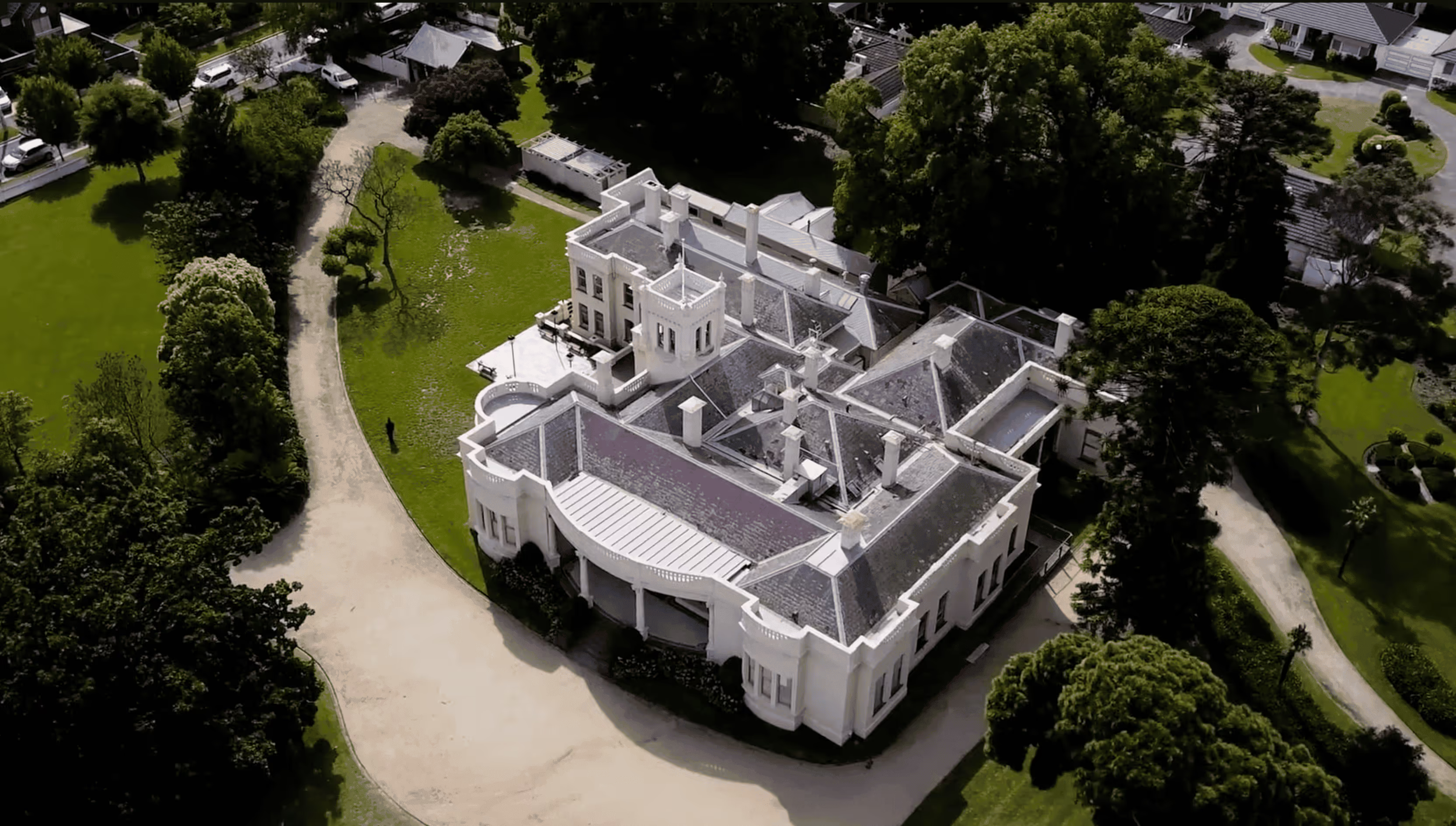
A historically significant site which is recognised on the National Trust Register, Billilla Mansion has been a local landmark for more than one hundred years.
Originally constructed in 1878, the mansion began as a Victorian villa and was transformed in the early 1900s by the Weatherly family and architect Walter Butler into a striking example of Arts and Crafts and Art Nouveau design. For more than 80 years, Billilla was the Weatherlys’ home and a hub of Brighton’s social life, before being purchased by Brighton Council in 1973 for public use.
Billilla stands on the ancestral land of the Ngaruk Willam clan of the Bunurong people of the Kulin Nation, whose deep connection to country stretches back thousands of years.